• Home
  • About
  • Contact
  • Advisory Board
  • DIsclaimer + Disclosure
  • 
  • 
  • 
  • 

Happy Healthy Kids

News and tips for helping kids grow strong, stay well, and feel good.

  • FOOD
  • FITNESS
  • FUN
  • WELLNESS
  • MENTAL HEALTH
  • JUST FOR YOU

Real Snow Slushies and Snowcones

January 27, 2020 by Kelley Leave a Comment

real snowcones and slushiesI’ve found a cure for cabin fever: real snow slushies and snowcones.

Typically, when the kids get squirrelly, I bundle them up and send them outside for a good, long while. But in blizzard conditions like the ones we’re experiencing outside of Boston today, you need to find some indoor fun, too. And so we brought the snow inside.

My kids have always been enchanted by that book, Carolyn Buehner’s Snowmen at Christmas: specifically, the page in which the snow mothers make snow treats for their snow children. I must admit, the spread that these domestic-goddess snow moms lay out is pretty mouthwatering:snowmen at christmas

So we decided to make some fruity snow treats in our house. It takes, literally, about 10 minutes, and you’re almost certain to have everything you need on hand (especially fresh snow).

Here’s what you need:

One small, clean bucket

Clean, freshly fallen snow

One game child (to collect the snow)

Your favorite juicy fruits (like lemon, orange, watermelon, strawberries, grapefruit)

A citrus squeezer (in a pinch, your hands and a fine mesh strainer will do)

One cup sugar

One cup water

How to make:simple syrup

Combine water and sugar in a saucepan and bring to a boil. Reduce to medium and cook until the mixture resembles a syrup consistency. Set aside to cool (put in fridge or freezer for a few minutes to speed up the process if desired).

Set out a row of small glasses or containers, and squeeze the fruits into them with a citrus squeezer or through a fine mesh strainer (keep the pulp out if your kids like smooth consistencies, like mine). In individual glasses I squeezed: one whole lemon; one whole orange; handful of strawberries; and some maraschino cherries (with a touch of the juice from the jar), because that’s what I had on hand. Fruit juice would be fine too, but in that case, reduce the amount of sugar you use for the simple syrup by one-third.fruit simple syrup

When syrup is cooled, top fruit juices with syrup.

Scoop snow into small cups, glasses or, if you really want to get fancy, paper cones. Though you can buy snow cone wrappers like these on Amazon (200 for $14 should get you through parenthood), that would take some advance preparation, and given that I didn’t even have D-sized flashlight batteries this morning in anticipation of a record-breaking blizzard, lord knows I didn’t have wrappers for snow treats. But they are easy to make: layer a sheet of tin foil on top of a piece of construction paper, roll into a cone shape, tape the ends together, and snip off the open top to make an even opening.snowcone wrappers

Top cones or slushie glasses with a scoop or two of fresh snow and fruit syrup (less for cones, more for slushies). It’s a great, refreshing treat after an indoor dance party or some rigorous outdoor snow playing or fort-building. Even my husband and I had a slushie. Save extra syrup in small containers in the ‘fridge—it will last for weeks (certainly until the next snowfall).

snow slushies


Share

Why We Should Cook with Our Kids

January 16, 2017 by Kelley 2 Comments

cooking with kids-2This is a guest post by Cassie Phillips, a freelance writer from Ohio. For more on Cassie, see below.

There’s no better time to get your children involved in cooking than winter—we’re all forced to be inside more, and there’s something cozy about being in the kitchen together. So why not just break out the board games and order a pizza? Solid research—as well as nutrition gurus like Michael Pollan—have convinced us that kids who are exposed to cooking eat more healthfully and try new things. And the benefits aren’t only health-related either; teaching your children cooking basics can boost their confidence, inspire conversation, strengthen math skills, and foster independent thinking.

Ready to shake images of accidents and messes, and get your kids in the kitchen? Follow these steps to get started.

Start Small

It’s important to begin one step at a time and first determine what sorts of cooking tasks your children can safely and confidently complete. Giving them too many tough tasks too quickly can set the stage for disaster. To keep you and them organized, establish firm roles at the start of meal prep, and give them just a job or two to focus on.

Preschoolers have limited dexterity, so should be given tasks that involve less fine motor work. Think:
-finding and fetching ingredients from the fridge and pantry,
-tearing leafy greens or fresh herbs
-stirring and mixing ingredients together
-mashing potatoes, yams, or turnips
-garnishing dishes with spices (or baked goods with sprinkles). Just be sure to measure out ingredients for them in advance if you want them to decorate or garnish anything!

Kindergarteners and young elementary-schoolers love to get their hands into things. Put them to work by:
-Washing and cleaning dishes; fill up a sink with soapy water and let them have at it
-Scooping, kneading or forming dough
-Preparing pans or bakeware by oiling, greasing or lining
-Spreading jams, peanut butter, or frosting
-Squeezing or juicing citrus and pouring ingredients into mixing bowls.

Older children can be given the tougher tasks as they get better and more comfortable in the kitchen. Teach them to:
-Chop and slice carefully. It might sound counterintuitive to hand children knives, but they can be taught to respect and be proficient with them by the age 7 or 8.
-Measure ingredients. Older kids can begin learning and remembering recipes.
-Use food processors and electric mixers. Close supervision is essential, but once they get the hang of these appliances, it will really make them feel like a chef.

Find Kid-Friendly Recipes

A lot of the food that will catch a child’s eye might not be practical to make. Obviously, it may not be a good idea to start out by baking something complicated like a triple-layer cake or macarons, as pretty as they are. You want them to be excited to eat what they cook, though, so picking a stew, if your child is meat- and veg-averse, may not be a good idea either. Children need time to pick up the basics, so you should start by researching some kid-friendly recipes, and your kids will love. One nice recipe to start with is a healthy, simple afterschool snack like these easy apple rings.

YouTube has a great lineup of different cooking channels with age-appropriate recipes. Some of my family’s personal favorites include Cook with Amber and Nerdy Nummies. Cook with Amber is hosted by a kid—which children love—and has a great mix of both healthy recipes and desserts. Nerdy Nummies is unique because it focuses on fun food that references our favorite fantasy worlds.

Get Cooking!

As there are so many benefits to cooking with your kids, there’s really no reason not to get started right away. It may even help improve your health if you’ve traditionally avoided spending much time in the kitchen.

What kinds of dishes are you looking forward to cooking with your children? Tell us your thoughts in the comments.

About the Author: Cassie is a health and technology blogger for eHealth Informer as well as Secure Thoughts and Culture Coverage. When not writing about her experiences and passions, she enjoys preparing healthy, delicious meals with her family.

Share

Healthy Summer Thirst Quenchers

June 29, 2016 by Kelley Leave a Comment

healthy summer thirst quenchersWhen most of us were kids, Coke was as common in the ‘fridge as milk, and thirsty Little Leaguers were as likely to be given Hi-C as water. But times have changed, and so has awareness when it comes to what our kids drink. Even wholesome-sounding juice has gotten a bad rap, and for good reason; a 16-ounce Ocean Spray Cran-Apple drink has 320 calories and 62 grams of sugar—more than three Twinkies.

“Think of juice like sugar water,” my friend, an obesity researcher at Harvard, recently told me while we watched second-grade soccer players suck down OJ and Munchkins after a recent game. Like the American Academy of Pediatrics, he advised that we should be offering children two beverages: milk and water.

Sound advice; but not much fun. Especially on a hot summer afternoon or evening.

I’m not ready to deprive my kids of soda and juice completely. Some of my warmest childhood memories involve Shirley Temples. I think lemonade is a rite—and right—of summer. But for those hot, not-so-special occasions, I wanted some refreshing options that don’t involve a snack-cake’s worth of sugar. So I fooled around with the blender and talked to my nutritionist and foodie friends. Then, I asked the kids to belly up to the kitchen island for some taste testing. Here’s what they say are worthy of second rounds.

watermelon slushieWatermelon Slushie

This is a great way to use up the watermelon in your ‘fridge that’s become a little mushier than ideal. If grown-ups are involved, add a vodka or gin to the adults’ pitcher. Delicious.

3 cups watermelon chunks
2 tablespoons lime juice
1 tablespoon sugar
1 cup cubed or crushed ice
1/2 cup water

If ice is in big chunks, add that to blender first to chop it up a bit. Then add other ingredients and blend until smooth but not too frothy. Serve immediately; give a quick stir if watermelon pulp floats to top.

Makes 4 cups

lighter lemonadeLighter Lemonade

I have yet to meet a kid who doesn’t love lemonade, and to deny children this summer staple seems cruel and unusual. But to counteract the sour base fruit, lemonade typically includes loads of sugar—27 grams, or 2.25 tablespoons, per cup. Thankfully, the kitchen scientists at Cook’s Illustrated have come up with a simple trick to cut half the sugar out of lemonade without losing sweetness: adding the zest to the lemonade while making it (and straining before serving). It works!

5 lemons
4 tablespoons sugar
2.5 cups room temperature or warm water
a pinch of salt

Put the juice of five lemons and most of the zest from all of them into a pitcher. (If you don’t already have them, a Microplane zester and an enameled citrus press make these jobs easy, and will serve heroically in countless other recipes.) Let the zest and juice sit for five minutes. In the meantime, mix water, sugar, and pinch of salt in a pitcher. Then, strain the lemon juice into the sugar water so the zest is removed. Chill in fridge for at least a half-hour and serve cold or over ice.

Makes 4 cups

ginger iced teaGinger Iced Tea

While kids aren’t commonly fans of hot tea, many like cold tea, and it can be a real treat for a summer dinner, luncheon or picnic. I love this flavorful homemade version, adapted from healthy chef Ellie Krieger. The ginger doesn’t overwhelm, just adds a nice zip (and some stomach-soothing benefits).

1/3 cup honey
1/3 cup roughly chopped ginger
2 cups water (plus 6 cups later)
5 black tea bags (I use decaffeinated Lipton, but choose your favorite—Raspberry or Orange flavored black would be good)
Juice from half a lemon

Bring 2 cups water, honey, and ginger chunks in saucepan over stove. Once it starts to boil, lower heat and simmer for five minutes. Turn off heat and add tea bags, letting steep for a half-hour. Meanwhile, fill pitcher with 6 cups cold water and juice from half of a lemon. After tea has steeped, strain out solids and add warm tea into cold water and lemon juice mixture. Chill for at least half-hour in fridge and serve cold or over ice.

Makes 8 cups (a large pitcher’s worth)

berry bubblerBerry Bubbler

This is a simple idea that elevates plain old seltzer into something a little more special. While I’ve posted about making homemade fruity ice cubes before, you can also skip the dicing and the trays and just freeze whole, small, firm fruit, like berries or grapes, to create instant, easy ice cubes that are really fun to eat at the end of your drink. Challenge the soda-lovers in your family to replace diet or flavored soda with seltzer or plain club soda for a week. We find that once you wean off of it, regular soda tastes cloyingly sweet.

1 liter favorite flavored seltzer (we like raspberry-lime, cranberry-lime, or Polar seltzer’s new Watermelon Margarita flavor)
1 cup raspberries (or blueberries or blackberries)

Spread a cup of berries on a small tray, plate, or piece of waxed paper in the freezer for at least an hour. Pour seltzer into a pretty pitcher and float a few frozen berries on top. Serve immediately.

Makes 4 cups

green monster waterGreen Monster Water

HHK’s resident nutrition advisor, the fabulous dietitian and cookbook author Dana White, loves serving fruit-infused waters to her kids in the summertime. “My girls like experimenting with different colors and flavors so we make a bit of a game out of it— making small batches to see what we like best,” she says. Because we are Red Sox fans around here, and it just so happens that a handful of Fenway-hued fruits and veggies—green apples, cucumbers, and green grapes—happen to hold up extra-nicely in a pitcher of water over time, we’ve landed upon this as our favorite flavor combo this year.

1/2 cup while green grapes (frozen in freezer for an hour beforehand makes them extra cold and crunchy)
1/2 cup cucumber slices (about 1/4 inch thickness)
1/2 cup green apple slices (about 1/4 inch thickness)
8 cups water

Combine cold or frozen fruit and water in pitcher, and chill in fridge for at least one hour. Serve infused water alone or with a couple of the fruits and veggies floating on top.

Makes about 8 cups (a large pitcher’s worth)


Share

Easy Ways to Cut Back on Sugar

November 11, 2015 by Kelley 2 Comments

cutting back on sugarIs a calorie just a calorie? Maybe not, especially when it comes to kids’ health. An eye-opening new study led by endocrinologists at the USCF Benioff Children’s Hospital in San Francisco showed that lowering overweight kids’ sugar intake, specifically, dramatically boosted their health—in just 10 days. Even without changing the amount of calories they were consuming or exercise they were doing, children who cut out almost all sweetened foods were able to improve their levels of blood sugar, cholesterol, fasting glucose and insulin (all markers for diabetes). They also reported feeling less hungry.

“This study definitively shows that sugar is metabolically harmful not because of its calories or its effects on weight; rather sugar is metabolically harmful because it’s sugar,” said lead author Robert Lustig, MD. “This internally controlled intervention study is a solid indication that sugar contributes to metabolic syndrome, and is the strongest evidence to date that the negative effects of sugar are not because of calories or obesity.”

A lot of us would say our kids don’t really have a “sugar problem,” because they don’t drink a lot of soda or eat too much candy, except for special occasions. But a lot of seemingly innocuous common kid foods are full of “sneaky” sugars that can really add up, says Dana White, R.D., Happy Healthy Kids’ nutrition advisor and author of First Bites: Superfoods for Babies and Toddlers. White gives these simple tips, along with some of her favorite recipes, that can help you cut potentially dozens of teaspoons of sugar out of your kids’ diets per day. And here’s the kicker: They might not even notice.

Load up on fruit. Fruit can satisfy a sweet tooth, especially if it’s presented to kids in a fun way. Frozen bananas make amazing treats with zero added sugar.

Bake with natural sweeteners. Applesauce or apple butter, bananas and honey can replace a lot of simple sugar in baked goods. White’s kids love these banana-chocolate chip muffins.

Be choosier about cereal. Even many “healthy” or “organic” cereals are full of added sugar, and that’s especially true for choices marketed to kids—they contain around 40% more sugar than “adult” versions. Stick to cereals like these that have 10 grams of sugar per serving or less (plain Cheerios, dressed up with berries, are hard to beat), or try White’s DIY Granola recipe.

Pay closer attention to packaged food labels. Candy, sweetened drinks, and baked goods are obvious offenders, but much of kids’ sugar intake comes from sneakier places, like condiments, bagged snacks, and flavored yogurts. Read labels carefully and take inventory of how much total sugar kids are taking in. The American Heart Association recommends that kids consume no more than 12 grams (young preschoolers) to 32 grams (teens) of added sugar per day.To put that in perspective: One small cup of Trix brand kids’ yogurt contains 13 grams of sugar.

Don’t take sweets off the table completely. Instead of demonizing sugar in your house, use it as an opportunity for everyone to learn about making wise choices most days, and saving (and savoring) sweets for special occasions. Most important, says White: Make sure mom and dad are leading by example and cutting back on sugar intake as well.

Recipe credits: Foodnetwork.com

Photo credit: Picture via Photo Pin, license cc 

Share

Make-Your-Own Apple Rings

October 8, 2015 by Kelley Leave a Comment

When my oldest son was an only and I still had the time, energy, and inclination to do daily, enriching projects with him (sorry, little sibs), we made a “fruit chart,” with his faves at the top and the ones he disliked at the bottom. Number one was strawberries (still is). Last: blueberries (all it takes is one shriveled, sour one to turn a kid off forever.)

Last week, the U.S. Department of Health unveiled a much more scientific poll evaluating the fruits most commonly consumed by American kids, and the winner, by a landslide: the humble apple. Turns out, one-fifth of children eat an apple a day. Which is great news: They’re full of fiber, a good source of vitamin c, and only about 90 calories.

Kids' Daily Fruit Intake
Apples (20%)
Fruit Juice (10%)
Melons (6%)
Other Fruit/Fruit Salad (5%)
Data from the National Health and Nutrition Examination Survey, 2011-2012

Apples are big in our house too, especially this time of year, when they are plentiful, cheap and at their apple rings 3peak of crunchy, sweet deliciousness. As millions of U.S. children apparently know, an apple is terrific as is, but I recently came across a pretty fun snack that makes them more “treat-like.” A little like the Make-Your-Own Trail Mix I wrote about a while back, the genius of this snack is that it lets kids in on the prep process, allowing them to customize their own apple rings as they would a pizza or cookies. I don’t know about your kids, but in our house, agency=greater acceptance when it comes to new foods.

Print
Make-Your-Own Apple Rings

Make-Your-Own Apple Rings

Ingredients

  • 2-3 large, round apples
  • A variety of toppings (here are some ideas):
  • -1-2 kinds of nut or seed butter (peanut, almond, or Nutella)
  • -Cream cheese
  • -Peanuts
  • -Sunflower seeds
  • -Chocolate chips
  • -Raisins or Craisins
  • -Mini marshmallows
  • -Shredded coconut
  • -Crumbled pretzels or chopped pretzel sticks

Instructions

  1. Core and thinly slice apples width-wise to make 1/4 wide rings.
  2. Serve the rest of toppings in small bowls and let kids decorate their own rings. Have them start by spreading each ring with a nut or seed butter or cream cheese to help the rest of the toppings stick.
3.1
https://www.happyhealthykids.com/make-your-own-apple-rings/

Share

Ultimate Summer Salad

July 31, 2015 by Kelley Leave a Comment


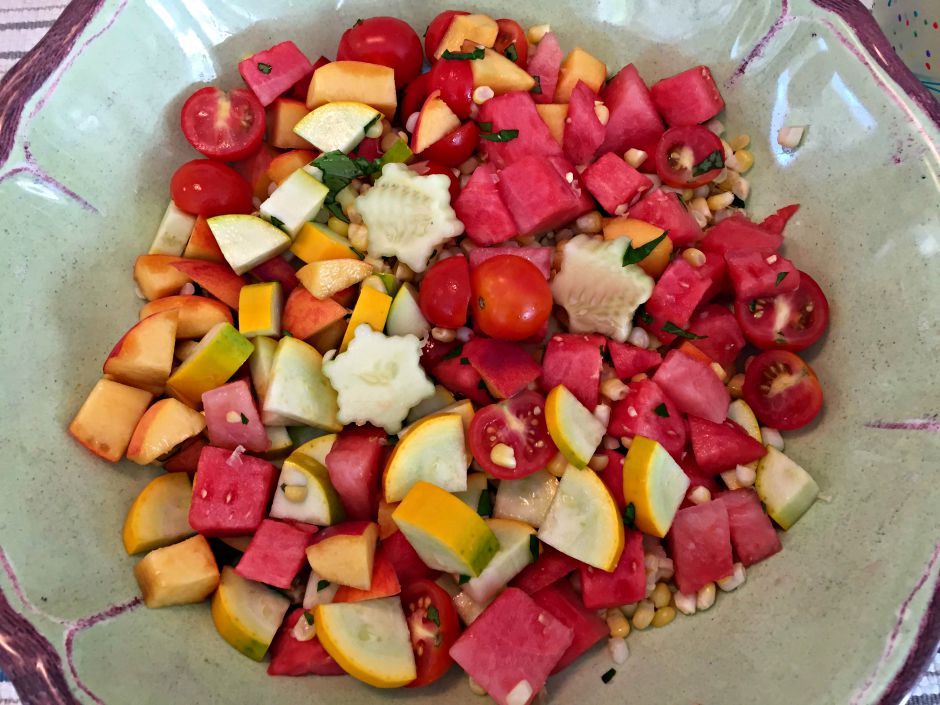
ultimate summer salad 2It’s late July, which means in the Northeast, at least, summer produce is peaking—to the point, in some cases, of total garden domination. We gardeners—and anyone who regularly hits a farmer’s market or

Our overflowing late-summer garden.

Our overflowing late-summer garden.

even just a well-stocked supermarket—are faced with bumper crops of just-ripe (or low-priced) corn, zucchini, cucumbers, tomatoes, peaches, and more. Too often, we pick or purchase perfect produce with high hopes, only to be digging a spongy specimen out of the crisper too weeks later.

boys at volantes 2015

The boys at our favorite local market, Volante Farms.

Rather than try to selectively use all this great produce one at a time, I’ve lately been making a big salad that showcases several at once. This approach is nicely family-friendly, kids can pick around the one or two things they don’t like, and seem to be more inclined to try something new when it’s cozied up to a fruit or veggie they’re used to. You can also mix and match to highlight whatever is growing or on sale. The one constant: watermelon, which all kids seem to love and has a mild taste that pairs well pretty much any summer veggie.

By not dousing it with heavy dressing—just a squeeze of citrus and a splash of good olive oil—this salad lasts for at least a few days in the ‘fridge. It’s great on its own or mixed with some protein—quinoa, edamame, cheese, pine nuts for lunch, or shredded rotisserie chicken, salmon, or shrimp for dinner.

Print
Ultimate Summer Salad

Ultimate Summer Salad

Ingredients

  • 1-2 cups diced watermelon
  • 1 cup tomato chunks (about five halved cherry or 1-2 seeded and chunked standard tomatoes)
  • 1 cup fresh corn kernels (shuck and boil 1-2 ears for 4 minutes; cool and slice kernels off)
  • 1 cup cucumber pieces (about 1 large cucumber; make half moon shapes or use these great flower shaped cutters
  • 1 cup yellow or green zucchini chunks
  • 1 cup diced fresh peach (about 2 small peaches)
  • 1/4 cup basil or mint, minced
  • 2 tablespoons extra virgin olive oil
  • 1/4 teaspoon salt (to taste)
  • 1/8 teaspoon pepper (optional, to taste)
  • One small lemon or lime, or 1/8 cup rice wine vinegar

Instructions

  1. Place veggies in large bowl. Drizzle with oil and sprinkle with herbs and salt (and pepper if desired). Place fruit chunks on top, and squeeze lemon or vinegar to taste. Mix well and serve at room temperature. Refrigerate leftovers.
  2. KIDS LUNCH: Serve with ham roll ups, cheese sticks, or mini sandwiches on the side
  3. GROWN-UP LUNCH: Mix in any or all: 1 cup cooked quinoa, 1/4 cup pine nuts, 1/4 cup shelled, edamame, 1/4 cup feta, 1/4 cup diced mozzarella
  4. FOR DINNER: Mix in or add to the side: shredded rotisserie chicken, poached salmon, grilled shrimp
3.1
https://www.happyhealthykids.com/ultimate-summer-salad/

Share

Have a Healthier Bake Sale

May 22, 2015 by Kelley Leave a Comment

healthier bake saleFollowing the lead of many schools around the country, our local high school is right now considering a ban on bake sales, citing recent federal guidelines that limit high-fat, high-calorie foods served during school hours.

I’m not alone in my view that banning bake sales is ineffectual, and perhaps even counter-productive, in the fight against childhood obesity. Forget the fact that bake sales are a major source of revenue for many school groups. Bake sales encourage people to make food at home, which is at least half the battle toward getting people to eat better. Home-baked goods tend to be far less processed, and contain fewer unhealthy fats, than the packaged goods that many kids would otherwise pick up at the corner mart or vending machine after school.

But that doesn’t mean that we can’t do better when it comes to bake sales. I recently read a thought-provoking blog post about school sweet bans by Claire McCarthy, M.D., a Boston Children’s Hospital pediatrician. As a mom who’d regularly sent cupcakes into school for her kids’ birthdays, she initially thought their school was crazy to disallow celebratory sweets. But then she considered the fact that “there’s something to be said for setting standards—and an example.” Kids get “35 to 40 percent of their daily calories at school,” she says, citing American Academy of Pediatrics’ research. “It’s not only important that the food they get in school be as healthy as possible, it’s important to use the opportunity (any opportunity, these days) to teach children and families about eating healthy.”

And then I recalled that the last treat I’d made for the kids’ school was Pokemon cupcakes—made from a box mix, since all the time I had the evening before was devoted to painstakingly decorating the cupcake tops into “poke-balls” (if you have a boy between the ages of 6 and 9, you might know what that means). Suffice it to say, the frosting contained enough red dye #40 to merit a case study into the effects of food coloring on kids’ behavior. The truth is, while I’m a passionate home baker, and make wholesome quick breads and muffins weekly, when I’m presenting treats for a birthday or bake sale, I’m a shameless crowd-pleaser. The more fat, sugar, sprinkles, and colors, the more likely kids are to gobble them up.

It got me thinking that instead of banning bake sales, schools should consider using them as an opportunity to get kids excited about slightly better-for-you sweets. I’m not talking about carrot sticks; think carrot muffins, maybe, with heart-healthier canola or coconut oil replacing butter. The goal is for slightly less sugar and fat, and maybe a few more nutrients, than your average Betty Crocker whip-up. Many of us have some healthier baked good recipes up our sleeve, and a growing number of cookbooks and websites are devoted to making treats more wholesome. Kids might balk at first, to see a table devoid of gummy-worm-topped cupcakes and jumbo frosted brownies, but I’m sure between a healthier bake sale and no bake sale at all, they’ll choose the former.

Here are a few recipes that have been kid-tested and approved among my kids’ neighborhood pals (this was an extra-fun week of blog research), and a link to more, below. *Note that two recipes contain tree nuts, and substitutions should be made in schools with tree-nut-allergic children.*

brown rice krispy treatsBrown Rice Krispy Treats

Would you believe that Rice Krispy treats that contain whole grains and zero dairy butter can actually taste delicious? I was a skeptic; no longer. (I tried substituting different natural syrups for the marshmallows, but the effect just isn’t the same; and kids can tell.) Cut into squares to fit into decorative cupcake liners to serve. Makes about 20 2-3-inch squares.

2 cup marshmallows
1/4 cup almond butter
3 tablespoons canola, sunflower, or coconut oil (I prefer coconut oil here)
1/2 teaspoon vanilla extract
1/4 teaspoon salt
5 cups brown rice cereal

Heat marshmallows over low-medium eat, stirring with wooden spoon or silicone spatula until melted smooth. Add oil and almond butter to warm mixture, until smooth and creamy, and turn off heat. Add vanilla and salt, and then fold in cereal. Using hands coated with a little oil, press mixture into square or small rectangular baking dish. Let cool and set before slicing.

strawberry cupcakesFresh Strawberry Cupcakes

It’s the perfect time of year for these delectable treats, which taste a lot like strawberry ice cream. The pale pink color in the frosting comes from strawberry puree. Thanks to Jen and Emily from Layers of Happiness for the recipe. It contains more sugar, butter, and white flour than might considered “heart healthy,” but we love the addition of the fresh fruit and extra egg whites to the recipe. Makes 12.

(Cupcakes)
1 1/2 cups whole fresh strawberries
1 1/2 cups flour, sifted
1 teaspoon baking powder
1/4 teaspoon salt
1/4 cup milk
1 teaspoon vanilla extract
1/2 cup (1 stick) unsalted butter
1 cup granulated sugar
1 large egg
2 large egg whites

(Frosting)
1 cup (2 sticks) unsalted butter, firm and slightly cold
pinch of salt
4 cups powdered sugar, sifted
1/2 teaspoon vanilla extract

Preheat oven to 350 and put cupcake liners in a 12-cup muffin pan. Sift dry ingredients and set aside. Remove green tops from strawberries and pulse them in food processor or blender until pureed smooth. In a small bowl, combine milk, vanilla, and 2/3 cup of the strawberry puree. In third, large bowl, cream butter and sugar with a mixer until fluffy, and then add eggs and whites. Slowly add dry ingredients, alternating with milk-strawberry mixture, until combined. Scoop batter into muffin cups and bake for 23-24 minutes. While baking, make frosting: Cream butter, salt and sugar until fluffy. Add vanilla and 1/4 cup of strawberry puree. Don’t over mix or frosting will be too fluffy; aim for an ice-cream-like consistency. When cupcakes are cooled, spread with room temperature icing. Top with strawberry slice if desired.

pumpkin muffinsPumpkin Muffins

Even kids who hate squash—dare I say, most?—tend to love pumpkin muffins. A muffin junkie, I’ve experimented with several recipes, and really like this one, which I adapted from a Food Network recipe created by Dana White, R.D., Happy Healthy Kids’ nutrition advisor and author of First Bites: Superfoods for Babies and Toddlers. Makes 18 regular sized or 36 mini muffins.

1 cup white flour
1 cup whole wheat flour
1 1/2 teaspoons baking powder
1/2 teaspoon baking soda
1/2 teaspoon cinnamon
1 teaspoon salt
1 cup light brown sugar
1 egg, beaten
1/2 cup canola, sunflower, or coconut oil
1 cup milk
1 teaspoon vanilla extract
1 can of pumpkin puree
optional: Pumpkin seeds for sprinkling on top

Preheat oven to 375. Put cupcake liners in muffin pan. In large bowl,mix brown sugar, egg, oil, milk, vanilla, and pumpkin. In separate bowl, combine dry ingredients and sift with fork. Slowly mix dry ingredients into wet ones, taking care not to over mix. Fill muffin cups with batter and sprinkle with pumpkin seeds if desired. Bake for 25 minutes (for regular sized muffins) or 12-14 minutes (for mini muffins).

zucchini chocolate chip breadZucchini Chocolate-Chip Bread

No one says no to this bread, and it’s as good for breakfast as it is for after school. Chocolate chips are optional but pair so nicely with the herby zucchini, I think they’re a must. Serve individual slices in decorative, labeled bags or pretty paper plates.

3/4 cup canola, sunflower, or coconut oil
1/2 cup honey
1/2 cup brown sugar
3 eggs, beaten
1/2 teaspoon vanilla extract
1 1/2 cups white flour
1 1/2 cups whole wheat flour
1 tablespoon cinnamon
1 teaspoon baking powder
1 teaspoon baking soda
1 teaspoon salt
2 cups grated zucchini
1/2 cup chocolate chips

Preheat oven to 350 and butter and flour a 9 x 5 inch loaf pan or 2-3 mini loaf pans. In large bowl, mix together the oil, sugar, honey, vanilla, and lastly, the beaten eggs. In separate bowl, mix together dry ingredients with a fork. Stir dry ingredients into wet ingredients until combined and smooth; don’t over mix. Fold in zucchini, and then chocolate chips. Bake 50-60 minutes until bread is slightly golden on edges and toothpick comes out dry (a few moist crumbs are okay).

dark chocolate hazelnut nutella barkDark Chocolate and Hazelnut “Nutella” Bark

Dana White introduced me to this antioxidant-packed recipe, which she created for the Food Network. Keep it in the freezer in between nibbles, and package in cellophane or ziplock baggies (with tops cut off and tied with ribbon).

1/2 cup chopped hazelnuts
16 ounces dark chocolate
1 teaspoon vanilla extract
1 teaspoon ground cinnamon
1 cup brown rice cereal

dark chocolate and hazelnut barkLine a large baking sheet with parchment paper or Silpat and set aside. In a double boiler or microwave, slowly melt chocolate. Stir gently with a wooden spoon or silicone spatula until smooth, and fold in cereal. Spread in a rectangular shape to 1/4 inch depth on baking sheet (doesn’t have to be perfect). Sprinkle nuts over evenly and press gently into surface. Let cool at room temperature for 1-2 hours or in the ‘fridge for 30-45 minutes. Break into pieces.

Fruit Flower Skewersfruit skewers

As the folks at Edible Arrangements found out long ago, fruit seems to just taste better when it’s cut into pretty shapes and put on a stick. Purchase short skewers at your hardware store, supermarket or here, and spring for these adorable flower shapes cookie cutters, which you can repurpose for cookies, Play-Doh, and other projects for years to come. Chill until just before selling; you can arrange in a flower pot, spearing the ends into a piece of styrofoam or floral foam tucked in the bottom, just like the pros do, or on a chilled plate. 

1 watermelon
1 cantaloupe or honeydew melon
1 bunch grapes, halved
1 pint strawberries

Slice melons width-wise, scraping away seeds at center. Use flower shapes to cut various size blooms. Layer on stick, with halved grapes between to look like flower centers. Top with hulled strawberries.

For more ideas, check out the Martha Stewart article, Better (For You) Bake Sale, and this Cooking Light Bake Sale post.

It’s important to get other parents on board with a plan for healthier bake sales at the beginning of the school year. (Buckle up for some blowback!) Present the idea to the school principal and at a parent association meeting, and offer to “test drive” a sale before making it a regular feature of the school year. Here are other tips, some mine, and some from a helpful PTO article on the subject.

How to Hold a Healthier Bake Sale
Look at traditional recipes and figure out ways to make them more health-conscious. In most recipes, the fat or sugar can be reduced by one-fourth to one-third without changing the texture. If you reduce both the fat and the sugar too dramatically, however, you will alter the texture. Always test drive recipes once or twice before serving them at a sale.
To further reduce the fat content, substitute applesauce or yogurt for up to half the oil or fat in the recipe.
Add seasonal fruit or veggies whenever possible. Berries, carrots, bananas, pumpkin, and zucchini add mild flavor that kids tend to like.
Make recipes healthier by boosting the fiber content. Adding oatmeal or nuts will help. In many recipes, particularly bread and muffins, you can substitute whole wheat flour for up to half the all-purpose flour and end up with the same yummy baked treats.
Ask parents to try to steer clear of store-bought treats and baked goods made from a mix.
Offer some treats for adults and children who are allergic. A gluten-free brownie, for example, can be made with black beans instead of flour. The Celiac Sprue Association has a list of gluten-free dessert recipes; you can also find recipes for many other specialized diets online, including ideas for diabetes-friendly or lactose-free sweets.
Offer the great health beverage of choice: water.
Make it easy for parents to find healthy recipes to prepare before the sale, and learn to make them at home after. Assign a baking-savvy parent to gather and print or email out a simple "cookbook."
Tips adapted from ptotoday.com
Share

Environmental Health Doctor’s Wish List

January 28, 2015 by Kelley Leave a Comment

environmental health kidsThis post is part of a “Wish List” series in which I ask experts in different kid-related fields—medicine, education, etc.—what they really want parents to know and do better. Interested in hearing from a certain type of expert? Please make a suggestion here.

For this installment of the expert “Wish List” series, we’re honored to share the wisdom of Jerome Paulson, M.D., a professor of pediatrics at George Washington University School of Medicine and Health Sciences and chair of the executive committee of the Council of Environmental Health for the American Academy of Pediatrics. Here, he tells us the five things he wishes every parent knew or did to help all kids—your own and future generations’ —consume healthier air, water, and food.

1. Consuming a variety of fresh, whole foods is more important than eating organic. We know that produce is full of antioxidants and other nutrients that help protect kids from all sorts of problems. But many people will be surprised to learn there’s actually no documented long-term health benefit of eating organic foods. Eat organic if you want to, but don’t limit your child’s intake of fresh fruits and vegetables, calcium-containing foods, and whole grains if buying organic makes these choices too expensive. If you want to be choosy about organic purchases, look at the Environmental Working Group’s Dirty Dozen and the Clean 15, here. They have an app that will allow for quick reference at the grocery store.

2. Take steps to be more energy conscious. Climate change is one of the major health problems facing the globe. Any parent concerned about the future of their children and the planet should make an effort to use public transportation and carpools whenever possible, buy the most fuel efficient vehicle consistent with safety and their budget they can find; conserve energy at home; and encourage their elected officials to change local, state, and national policy so the U.S. can contribute to climate change mitigation where possible and adapt to climate change where it must.

3. Avoid toiletries and cosmetics that include endocrine disrupting chemicals. Certain chemicals common in household products are thought to possibly interfere with many chemical processes in growing bodies and are known to have adverse health effects in animals. Err on the side of caution and avoid buying soaps, lotions, and makeup for your kids that contain triclosan, phthalates, parabens and certain other ingredients (for a full and helpful list, check out the EWG’s Skin Deep page, here).

4. Keep indoor air free of pollutants. Polluted indoor air is a big asthma risk. Don’t allow people to smoke in your home—ever—and work with your local school district to take steps to keep the school’s indoor air clean by avoiding air fresheners and keeping humidity down to inhibit mold growth. Moms Clean Air Force and the American Lung Association have great tips on their websites.

5. Take your shoes off when you enter the house. You’d be amazed by how much bad stuff is tracked in on the soles of shoes—pesticides and harmful chemicals, just to name a couple. Make a designated spot by the door where everyone in the family can stow their boots and sneakers, and get everyone into the habit of removing their shoes when they come into the house.

Photo credit: Odin Thomas via Photo Pin, cc

Share

25 Superfoods For Kids

January 22, 2015 by Kelley 1 Comment

I love the idea of superfoods—produce and proteins that naturally pack a nutritional wallop in each bite. However, the typical superfood lists found in magazines and health websites aren’t exactly workable for my family of three boys. If I have trouble finding, much less enjoying, goji berries and kombucha, how am I going to get my six-year-old on board?

Thankfully, Dana White, R.D. who is on our advisory board, has compiled a go-to list of kid-friendly superfoods in her fantastic new book, First Bites: Superfoods for Babies and Toddlers, which includes tips and easy recipes for feeding children of all ages. Whereas many healthy food lists are compiled by sources whose expertise lies, er, elsewhere (i.e., bodybuilders and massage therapists), Dana is a certified dietitian and mom who knows her stuff and provides stats and delicious recipes to back it up. Click here or on the image link in our “Great Reads” column on the right to pre-order the book or its Kindle edition (it’s available Feb. 3), and check out 25 of her 50 favorite superfoods for kids, below. One of my New Year’s resolutions: adding one new food from this list to my shopping cart each week, and trying it out with my kids. (Next up: coconut milk smoothies.)

And here’s a hint: Go ahead and tell your kids that you are serving them a “superfood,” and explain to them how it benefits their bodies (“carrots can help your eyes have super vision”; “salmon is good for your brain and can help you learn,” etc.) They may be just a little more motivated to try it.

applesApples

Full of fiber, vitamin C, and antioxidants, this is a naturally sweet treat that’s great to always have on hand.


HHK recipe: Best Easy Applesauce, Six Ways


avocadoAvocados

A great first food, this creamy green fruit has heart-healthy monounsaturated fats as well as vitamin C, vitamin K, folate and potassium.


black beansBeans

Black or kidney beans can pump up the protein and fiber in kids’ diets, and are soft and easy to eat.


bell peppersBell Peppers

There’s more vitamin C in a bell pepper than an orange, and kids who are opposed to cooked veggies often love to snack on raw red pepper strips.


berriesBerries

Blueberries, raspberries, blackberries, strawberries, and cranberries are all filled with antioxidants called anthocyanins, which protect blood vessels and the nervous system and improve eyesight.

HHK recipe: Summer Berry Corn Muffins


broccoliBroccoli

Served raw, steamed or oven-blasted with a bit of butter, these “little trees” contain cell-protecting antioxidants as well as fiber and other vitamins.


brown riceBrown Rice

Brown rice has 10 times more energy producing B-vitamins than the white kind. Get kids started on it early, and try brown rice crackers, breads, and pasta, too.


carrotsCarrots

These bright-colored veggies, served raw or cooked to bring out their natural sweetness, provide all kinds of nutrients important for growth, development, immunity and vision.

HHK recipe: Carrot-Apple Muffins

cheeseCheese

Cheese packs protein plus bone-building calcium, vitamin D, and phosphorus—try mild versions like Monterey Jack, mozzarella, or American at first.


chickenChicken

The flavorful dark meat contains healthy, polyunsaturated fat, and the mild flavor and tender texture makes it a great first protein for babies.


HHK recipe: Honey-Lemon Chicken Thighs

coconutCoconut

Swap water for coconut milk as a cooking liquid for rice or noodles or add it to smoothies—it’s a natural source of electrolytes (sodium and potassium), and most boxed versions are fortified with calcium and vitamin D.

HHK recipe: Hummingbird Bread

cornCorn

Do you know corn is actually a whole grain? It’s full of the antioxidant zeaxanthin, which benefits vision, and also contains some fiber and protein. Opt for unprocessed versions—in popcorn or corn on the cob.


cucumberCucumber

Low in calories, high in water content, and pleasingly crunchy and mild, this is a great choice for kids who turn their nose up at other green veggies.


eggsEggs

Hard-boiled, scrambled, or mixed into baked goods, eggs contain just about everything that’s good for growing bodies: protein, healthy Omega-3 fats, and vitamins A and D.


honeyHoney

Suitable for kids over age 1, honey is a natural sweetener for oatmeal, cereal, and baked goods; a teaspoon or two can also help soothe coughs.


kaleKale

Surprisingly kid friendly when used as a crunchy salad ingredient or baked into chips, this leafy green vegetable contains oodles or vitamin K plus iron, potassium, calcium, and folate.

Print
Kale Chips

Prep Time: 10 minutes

Cook Time: 5 minutes

Yield: 6 to 8 cups

You can find these packaged in the chip section of many supermarkets, but making your own is quick, easy, and cost-effective. Excerpted from First Bites: Superfoods for Babies and Toddlers by Dana Angelo White. © 2015 by Dana Angelo White. A Perigee Book, Penguin Group USA, A Penguin Random House Company.

Ingredients

  • 1 large bunch kale, stems removed and roughly chopped (about 6 to 8 cups)
  • 1-2 Tablespoons of oil
  • Kosher salt and black pepper
  • A pinch of paprika, cumin or mild curry powder (optional)

Instructions

  1. Preheat oven to 400. Place kale on baking sheets. Drizzle with oil and sprinkle with salt and pepper to taste, and toss well. Bake for 3 to 5 minutes, turning once or until leaves just become crispy.
3.1
https://www.happyhealthykids.com/superfoods-for-kids/


milkMilk

One cup provides about a quarter of the daily recommended amount of bone-building vitamin D, and is also a great source of vitamin B12 for DNA formation and energy metabolism.


oatsOats

Use it in granola, cookies, or muffins—it’s full of heart-healthy soluble fiber.


citrusOranges (and other citrus)

Oranges and clementines are sweet, simple treats most kids love; try dipping segments in dark chocolate for a special treat.


HHK recipe: Orange Juice Sherbet

pastaPasta

A classic kid-favorite food, pasta is enriched with vitamin B and iron, and is excellent fuel for active little ones. Start with easy-to-digest white versions, but introduce whole grains early so kids can acquire a taste for them.


pearsPears

A truly under appreciated fruit, pears are a serious source of fiber and vitamin K. Pearsauce is a great alternative to applesauce.


porkPork

Chops and tenderloin are low in fat, and have more B vitamins than most other meats. Slow cook to make tender for tots—they’ll love the mild flavor.


pumpkinPumpkin

High in vitamin A and antioxidants like beta carotene, it can be pureed and served plain for babies or added to muffins and quick breads for the whole family. Don’t forget the seeds—a tasty source of iron.


seafoodSeafood

In June, the FDA increased their recommended amount of fish that children should be eating. Low-mercury choices like cod, salmon and shrimp are high in protein and a good source of Omega-3 fats that are vital for brain development.

HHK recipe: Kid-Friendly Fish Recipes

yogurtYogurt

Each cup contains a hefty dose of protein, calcium, and gut-friendly probiotics, and many brands are fortified with Vitamin D.


HHK recipe: Popeye Smoothie

Share

Holiday Treat: Hummingbird Bread

December 18, 2014 by Kelley 1 Comment

hummingbird bread 1I’ve written before about how much I like homemade quick breads. They’re easy to make, can be packed with fruits and veggies, stay fresh for days, and can serve as a snack, breakfast, or dinner side dish. For all these reasons, they also serve as great gifts.

This holiday season, I’m making a new fave, Hummingbird Bread. Inspired by the cake that famously ran in the 1978 issue of Southern Living (and is to this day, the magazine’s most requested recipe), it contains bananas, crushed pineapple, shredded coconut, and cinnamon, ingredients that are easy to get, and yet feel like a tropical escape, in the middle of wintertime. I’ve based this recipe on one from the great Beth Bakes blog, but made some changes, including adding coconut, a pinch of salt, and swapping out pineapple for vanilla yogurt.hummingbird bread 4

If you really want to remain true to the original, you can ice the entire loaf with cream cheese frosting and a sprinkling of chopped pecans, or toast slices and slather them with cream cheese. I like it plain, warm, and alongside a cup of coffee, warm apple cider, or hot chocolate.


Print
Hummingbird Bread

Hummingbird Bread

Ingredients

  • Half stick of butter, softened
  • 3/4 cups granulated sugar
  • 2 eggs
  • 2 mashed, ripe bananas
  • 6 ounces vanilla yogurt
  • 8 ounces crushed pineapple (canned or pureed in processor)
  • 2 cups flour
  • 3/4 teaspoon baking soda
  • 1/2 teaspoon salt
  • 1 tsp ground cinnamon
  • 1/2 cup shredded sweetened coconut (I blitz these in processor a bit so the cut is finer)

Instructions

  1. Preheat oven to 350.
  2. Cream butter and sugar together in a large bowl with an electric or standing mixer, and then add mix in eggs, bananas, and yogurt at low-medium speed. Fold in pineapple.
  3. In separate, medium-sized bowl, stir together flour, baking soda, salt, and cinnamon. Add in batches to the wet ingredients, stirring until just incorporated. Fold in coconut at the end.
  4. Pour into greased and floured, 9 x 5 loaf pan (or divide between 2-3 mini pans). Cook for 45-50 minutes (or about 35-40 minutes for mini pans, checking for doneness).
3.1
https://www.happyhealthykids.com/hummingbird-bread/


Share
  • 1
  • 2
  • Next Page »

SPONSORED CONTENT

Signup!

Sign up for our weekly newsletter and never miss out on another happy healthy moment!

Accolades

Finalist... thebloggies
parentsinsider

GREAT READS

Tags

big kids breakfast chemicals dinner drinks emotions environment fruit guilt busters holidays hygiene illness indoor games kindness little kids lunch media medicine nature nutrition organizing outdoor games pets projects reading recipes relationships safety school siblings sleep snacks sports spring stress summer teens treats vaccines vegetables vitamins weight winter wish list women's health

Archives

My Favorite Sites

  • Thriving: Boston Children’s Hospital Blog
  • Motherlode: New York Times Blog
  • Healthy Children (AAP)
  • Two Peds in a Pod
  • What Great Parents Do
  • Child Psych Mom
  • PlayFit Education
  • Dana White Nutrition
  • Seattle Mama Doc: Seattle Children’s Hospital Blog
  • Moms Team
  • Safe Kids
  • Common Sense Media
  • The Parents Perspective (Parents mag)
  • Zen Parenting Radio

Spread the Word…

Share

Copyright © 2026 Happy Healthy Kids | Web Design by Viva la Violette