• Home
  • About
  • Contact
  • Advisory Board
  • DIsclaimer + Disclosure
  • 
  • 
  • 
  • 

Happy Healthy Kids

News and tips for helping kids grow strong, stay well, and feel good.

  • FOOD
  • FITNESS
  • FUN
  • WELLNESS
  • MENTAL HEALTH
  • JUST FOR YOU

New Kids’ Clothing Line—and Free Shipping!

March 31, 2015 by Kelley 2 Comments

primary the dressAt some point in the past decade, well-made, simple kids’ clothing became a seriously endangered species. As soon as you think you’ve landed on a perfectly nice blue shirt, you discover it’s covered in bubble letters, or leprechauns, or Phineas and Ferb. Dresses seem styled either for a baby doll or a Pussycat Doll. Even khakis are complicated, with buttons that stymie even nimble-fingered grown-ups. And just about everything—just ask my oldest son—is scratchy.

That’s why I’m grateful for the launch, today, of Primary, a new, totally original, basics-based clothing line that combines practicality, cuteness, comfort, and value. The company is offering 32 “essential” pieces in soft, long-wearing materials and delicious colors, from pool to petal to sunshine, all online. Everything is under $25. And when you enter the coupon code HHK at checkout anytime between now and May 15, you get free shipping on that order and all others—no minimum—for a whole year.GalynChristina

Full disclosure: Co-founder and CEO Galyn Bernard was my college roommate and is a dear friend of mine. Does that make me biased? Yes, but for the best of reasons: Galyn is just about the smartest, savviest, hardest-working and fun mom I know. If anyone is going to reform the overpriced-cheetah-print landscape that is kids’ clothing today, it’s her and her equally accomplished partner, Christina Carbonell, with whom Galyn worked in brand development at Quidsi (which owns and operates Diapers.com, YoYo.com and others). I asked Galyn a few questions to get a better sense of what’s in store for Primary.

Q: Why Primary?

A: After more than a dozen years shopping for clothes for our own kids, Christina and I still didn’t have a go-to for the stuff our kids wear every day. Everything in the market just seemed more expensive and harder to shop for than it should be. I think we were especially sensitive to it because we spent so much time at Diapers.com figuring out how to get busy parents their diapers and formula as quickly as possible. And we just wanted to be able to shop for basic kids clothes the way we used to shop for diapers—where it is incredibly easy to find the kind you like and buy more of them in bigger sizes whenever you need to. No other kids clothing brand is focused on this kind of easy experience. Through an online only sales model and a direct supply chain, Primary will offer quality, essential clothing for kids (newborn to 10 years), all priced under $25.

Boys' polo, $16

Boys’ polo, $16

Q. What were the very first Primary items you wanted to design for your own kids? 

A. Sundress, girls’ shorts, and a polo were at the top of the list. Our girls wear a sundress everyday when it’s warm, and we wanted a well-priced classic version that was easy for school, playing, or going out to dinner. Plus, ours is reversible! Our kids refused to wear shorts that weren’t gym shorts because stiff fabrics and fussy closures, so we rethought a “nice short” that is comfortable and easy to wear. Finally, a nice, relaxed modern jersey polo for boys and girls was a must.

Primary_Launch_Girl_KnitDress_Sunshine

The dress, $16

Q. What are 1-2 must-have items for spring?
We really curated the assortment so that everything is a must-have, but if you have to choose, go for the boys’ jersey polo (soft, easy version of the classic in a ton of colors); boys’ gym short (slightly slimmer cut and great quality fabric work just as well outside of basketball practice); girls’ knit dress (amazing colors and price point and a no brainer for getting out the door fast and being happy all day long); and the girls’ capri legging (great, wide no-roll waistband and soft fabric with lots of stretch).

There you have it. Happy spring shopping, all. Don’t forget to plug in HHK when checking out before May 15 for a year’s worth of free shipping.

Share

Spring Craft: Nest Helpers

March 12, 2015 by Kelley Leave a Comment

nest helpers 1Just when you think winter will never end, you wake up one morning to the tweeting of birds. The sound always makes me happy: I was raised in a family that was big on birds. We had multiple feeders outside our kitchen window, and my mom always made note, over her cup of coffee, about which birds were enjoying breakfast at the same time we were.

Now, I keep a Droll Yankee feeder—the easiest to refill and hang—in a sugar maple tree off the family room, and the boys and I always look for the neighborhood blue jay to make his rounds. Keeping a feeder filled has always seemed to me to be a great way to teach kids a number of lessons at once: selflessness, appreciation of the natural world, and the value of quiet observation, to name a few.

Yesterday morning, we visited the incredible deCordova Sculpture Park in Lincoln, MA, where curators were celebrating Henry David Thoreau’s Walden through artwork and interactive exhibits. In the kids’ activity room, museum staffers introduced the boys and me to a project I had never heard about before but immediately fell in love with: nest helpers. Basically, you gather a variety of natural and synthetic filler materials—from yarn to netting to sticks and leaves—and bind it together with pipe cleaners or yarn to hang or suspend in a tree. Especially in the still-barren days of early spring, birds will pull from these little bundles to build their nests.

The results are a little messy looking, which is really the beauty of this craft. It’s great for little hands and short attention spans. Here are some good materials to start with. Anything soft and strong works; biodegradable is best.nest builders 2

-Pipe cleaners, wire, or a berry basket from the supermarket

-Different color yarn, snipped into 1- or 2-foot strands

-Twigs and leaves

-Raffia or ribbon

-Spare fabric or rags, cut into small pieces

nest helpers 3Start with a little holder for your materials: Bend two or three pieces of pipe cleaner or multiple strands of wire around one another to make a spherical shape, twisting closed at the top until an open ball is formed. (A berry basket is ready to go.) Stuff the ball or basket with your soft materials and hang the nest helper from a tree where birds frequent. Watch throughout the spring to see if your materials disappear, and keep an eye out for nests that have been made with colorful pieces from your helper ball or basket.


Share

Sled Safer: Six Things to Know

January 28, 2015 by Kelley Leave a Comment

sledding safety tipsToday, while watching my sons hurtle down a bumpy, tree-banked hill on a dinky plastic saucer, the thought occurred to me: Why don’t we take sledding safety more seriously?

I know this is making me sound like the wettest blanket around, but think about it: We make our kids wear helmets while skiing, biking and skating, and make all sorts of rules and parameters when it comes to their participation in these activities. But sledding is usually a free-for-all: no protective gear, loose boundaries, and minimal vigilance on our part.

Turns out, doctors are concerned about sledding safety, too. A 2010 study by researchers at Nationwide Children’s Hospital showed E.R.s see more than 20,000 sledding injuries a year, four percent requiring hospital admission. The most frequent injuries were fractures, and the head was the most commonly injured body part.  Snow tubes were associated with the most serious injuries, a fact borne out tragically on Monday, when a teenager in New York died after crashing into a light pole.

I did some digging to find some expert advice on how we might have a safer sledding experience tomorrow, and here’s what I learned:

Don’t sled where it’s overcrowded. Pair up with just one or two friends and find a clear hill to do your runs—or hit a popular spot early or late in the day to avoid collisions. Injuries to the head are twice as likely to occur from collisions as from other mechanisms.

Choose wide-open spaces. Don’t sled where there are lots of trees or a road, parking lot, or body of water at the end of the sledding hill.

Use caution on snow tubes. Traumatic brain injuries were more likely to occur with snow tubes than other sled types, possibly because they reduce the rider’s visibility. (This is news to me: I assumed they were somehow safer, because they were more cushioned.) If you are going to tube—and I know, it’s so fun—do it in a spot where there are few people and no obstacles.

Consider helmets. Kids are so used to wearing them for other activities, why not sledding? Be the first in your ‘hood and set a trend.

Banish belly slides. This will be a hard one to enforce in our house. But experts urge parents to teach their kids to only ride sitting upright, and facing forward, to reduce the chance of crashes and collisions.

Teach kids to keep their eyes open for other sledders at all times. They should watch where they are going on the way down, and to move out of the way and look up immediately when they finish a run.

I know we have some work to do to meet these safety goals; do you?

Photo credit: Yooperann via Photo Pin, cc

Share

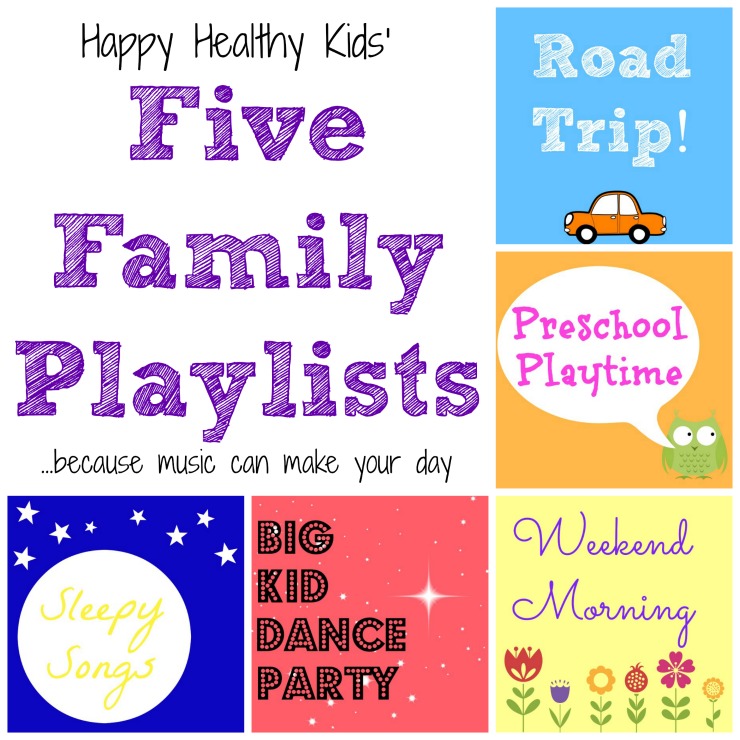
Five Family Playlists

January 16, 2015 by Kelley Leave a Comment

family playlistsMusic is like medicine: The perfect song, at just the right moment, can provide clarity, perspective, or release. With my kids, I use it like a reset button, to help them wake up, relax, or snap out of sour mood. Just last night, when the kids clearly needed to let loose after dinner and before their baths (finding one attempting to scale a doorjamb, American Ninja Warrior style, gave me the hint), I cranked up the old-school jam “Apache” on my phone as they shed their clothes for bath time. Just ten minutes of dancing to the Sugarhill Gang, underpants optional, turned out to be just what they needed to settle into the evening.

Last week, I asked friends and readers to share some of their favorite tunes to play with their kids in various settings—to rock out, chill out, or just pass the time in traffic. I got some great feedback, and naturally wasted a ridiculous amount of time online checking out their choices and discovering some new ones. You can connect to these via Spotify—it’s free, easy and really worth subscribing to, if you haven’t yet (you’ll get a prompt when clicking on a song). You can also find these songs on iTunes, Amazon, and Soundcloud, too. Let me know what you think, and please share your own family faves, as I will almost certainly do another playlist post at some point. This just might have been the most fun post to write, ever.

Note that all of these playlists have many more songs than the ones previewed in boxes, here. Just click on the edge of the box and scroll down for the full list. You can also find these and other playlists on Spotify directly by typing spotify:user:happyhealthykids into search bar at the top of the page.

Playlist #1: Preschool Playtime

There are quite a few really terrible “toddler time” playlists online, with the same group of tinny-voiced children singing the same creaky nursery rhymes to the same synthesizer beat. And yet, much of the new kiddie rock music is inaccessible to 2- and 3-year-olds. Here’s a mix of nicely produced classics and catchy newer tunes that are good for playdates, craft time, or car-seat time.

Playlist#2: Family Road Trip

Finding something suitable for the entire family in the car can be tough when a mix of ages and a musically snobby grownup or two are present. This is where some of the truly clever and often very funny new kids’ rock music comes to play. These songs are playful without being too babyish for elementary schoolers, and all have a good beat.

Playlist #3: Big Kid Dance Party

Our entire clan, ages 3 to 8, really digs this, but with a few “damns,” a couple “sexys,” and a drinking reference here and there, a more sensible parent than I might choose to reserve this as an after-dark playlist for the ‘tween set. It also doubles nicely for runs and workouts.

Playlist #4: Weekend Morning

Pleasant, upbeat music can have a positive effect on everyone in the household. All of these songs have a slightly ambient quality that’s well suited to lazy or busy weekend mornings. At the very least, you can enjoy listening to this while pretending to not hear your kids fighting over the new Hot Wheels track in the basement.

Playlist #5: Sleepy Songs

Every parent should have a sleepytime playlist in their back pocket—for frazzled nap times, long, sick nights, or nighttime road trips when the kids need to sleep. This is an extended version of a playlist I’ve been passing along to my best new-mom friends for years now. It got us through colic. Hope you like it.

Share

Orange You Glad It’s December?

December 4, 2014 by Kelley Leave a Comment

‘Tis the season for citrus fruit. Get into the holiday spirit by making delicious scones, scented play dough, pretty decorations, and more.

If the holidays could be boiled down to a smell, to me, it would be citrus. Though Santa didn’t leave an orange in the toe of my childhood stocking, as he oranges in seasondid in The Velveteen Rabbit, we received a crate of fresh-picked oranges from Sunshine State relatives every December that would last us months. My mother made the most of them, stacking them in bowls and chunking them into fruit salads through the winter.

It’s a good time to celebrate citrus, as it’s one of the only families of fruit that peaks as the weather turns cold. While these fruits aren’t exactly local for us here in Massachusetts, they are seasonal, and hence my top picks of the produce aisle this time of year. While grocery stores carry oranges, clementines, grapefruits, and of course lemons and limes, some specialty markets carry their more exotic cousins, like kumquats, blood oranges, and Meyer lemons, which are fun flavors to experiment with in cooking. Finally, citrus fruits are packed not only with immune-boosting vitamin C —you can get 93% of your daily recommended intake in a single orange— but also fiber and the heart-healthy phytonutrient herperidin, found mostly in the pith and zest of the fruit. As research tells us that it’s better to get our vitamins from the market than the drug store, you can’t go wrong with stocking up on as many orange and yellow globes as you can this season.

In case you’re wondering what to do with all that luscious fruit, I’m sharing some of my favorite recipes and crafts, here. Have more? Please share!

For Holiday Breakfasts and Brunches…make Orange-Cranberry Scones.

orange cranberry scones 3This is one of those recipes where the impressiveness-to-ease ratio is rewardingly high. Scones are simpler than you might think to make, and yet feel like more of a special treat than quick breads and muffins. This recipe is my baking-queen sister Julie’s, and a highlight of a festive breakfast, brunch or afternoon get together. Make a double batch and freeze by the handful into gallon-size plastic bags. That way you can pull them out and defrost them whenever the occasion calls for it.
I like these scones with cranberries and so does my eldest, but I have another child who likes them with just the orange flavoring and another who likes them with chocolate chips. You can split the dough in half and fold individual favorites (or nothing at all) into the two orange-zested sections.

Print
Orange-Cranberry Scones

Orange-Cranberry Scones

Ingredients

  • 3 cups flour
  • 1/3 cup sugar
  • 2 1/2 teaspoon baking powder
  • 1 teaspoon salt
  • 1/2 teaspoon baking soda
  • 1 Tablespoon grated orange peel
  • 3/4 cup chilled unsalted butter, cut into 1/2 inch pieces
  • 1 cup chilled, lowfat buttermilk (whisk a tablespoon of lemon juice into milk if you don't have buttermilk)
  • (optional) 3/4 cup dried cranberries or chocolate chips
  • 1 egg
  • Sprinkle of sugar

Instructions

  1. Line baking sheet with parchment paper (or use nonstick sheet). Sift flour, sugar, baking powder, salt, and baking soda into a large bowl. Mix in orange peel. Add butter and rub in with fingertips until mixture resembles coarse meal (you can use a food processor instead). Mix in dried cranberries, chocolate chips, or nothing. Gradually add in buttermilk, tossing with a fork gently until moist clumps form. Turn dough out onto lightly floured surface, kneading about 4 turns to bind dough. Form into 1 inch thick round, and then cut round into triangles. Brush with whisked egg and add a sprinkle of sugar to the top. Transfer wedges onto baking sheet and bake until tops are golden brown, about 25 minutes.
3.1
https://www.happyhealthykids.com/orange-recipes-for-kids/

For weekend crafting…make Pomanders and Orange Slice Ornaments.pomander ball 2

So smitten am I by oranges that when we were tasked with doing a “how-to” presentation in fourth grade, I taught my nine-year-old peers how to make pomanders. Traditionally, these are oranges and lemons studded with cloves, rolled in spices, and left to rest in a cool place for a week or two, after which they’re dried out (i.e., you don’t have to worry about mold), but still smell delicious. You can hang them on the tree or from satin ribbon in a doorway. I leave out the spice part, because it’s a messy step that I think takes away from the pretty look of the decorated fruit. You can display them “fresh” (they’ll last for a week or two) or dry them for a week or so (they’ll last through the month).
What you need:
An assortment of oranges or lemons
One quarter-cup of whole cloves
Toothpicks
Stain ribbon, push pins, and strong glue (if hanging from a tree)pomander ball 1
How to make:
Think of a design for the cloves on your pomander—you can make polka-dots throughout, lengthwise stripes, spirals, or cover the whole thing. Use a toothpick to push small holes just into the surface of the orange or fruit according to your design. Push cloves into holes. Arrange in a bowl, or if you want to hang on the tree, put a dab of strong glue on the top of the fruit and secure a loop of ribbon to top with a pin. Store finished pomanders in a cool, dry place for a week or two. (Check on them every so often; they shrink, so you might have to push cloves in farther). orange slice ornaments 2

Orange slice ornaments are even easier to make. Basically, you slice oranges, cook them at a low temperature, and hang them from satin ribbon. They look like stained glass, hanging from an evergreen bough.
What you need:
2-3 oranges
Satin ribbon (1/4-1/2 inch is best)
Paring knife

orange slice ornaments 1
How to make (start in morning!):
Preheat oven to 150. Slice oranges into 1/2 inch thick pinwheels. Arrange on a parchment-lined or nonstick baking sheet and cook for 4-5 hours. Rounds will still have a little moisture when you take them out of the oven, but will keep drying out. Once rounds cool, make a tiny slit between juicy part and rind, and thread ribbon through it, tying in a bow or knot. Hang from a lit tree or sunny window to catch the light.

To make salads more special…add clementine sections.clementine salad

One of my a-ha moments as a newish mom was discovering that a little fruit can go a long way to making everyday dinner staples more palatable and exciting to kids. A quick and easy way to get my kids to eat their greens is adding clementine sections to a simple salad. Whisk a tablespoon or two of olive or Canola oil and a half-teaspoon of salt into the juice squeezed from a fresh orange or lemon for dressing, and drizzle it over the salad.

homemade play doughFor toddler fun…make Orange-Scented Play Dough.

I never figured myself for a homemade-play-dough sort of mom until I tried making it, and realized it’s so easy and such a nicer texture than the store-bought stuff. You can also add scents, through spices and oils, which makes it fun for kids to pretend they are rolling out “cookies” with their freshly made play dough. I’ve made this dough with orange extract, which you can buy at the supermarket or here (it never spoils and is great for use in cakes and breads). You could also use orange oil, here, which can also be added to a handful of drug store Epsom salts for a spa-like bath (which you might welcome after a day of holiday crafting).
What you need:
1 cup water
1 cup flour
1/4 cup salt
2 Tablespoons cream of tartar
Red and yellow (or orange) food color
How to make:
Stir water, flour, salt and cream of tartar in saucepan over medium heat with spatula or large spoon. Keep stirring, pulling away from sides of pan. Add food color until you reach desired color, continually stirring, until mixture is Play doh consistency. Let cool and form into a ball. Store in airtight container for a week or two.

For a special treat…make Lemons with Candy Cane Straws.lemons with candy cane stick

My pals who grew up going to Pennsylvania’s Devon Horse Show with me can back me on this: One of the most exciting and least revolting fair foods you can give a child is a lemon pierced with an old-fashioned candy stick. When you suck hard enough, the lemon juice starts to flow through tiny holes in the candy stick, and the result is like the best lemonade you’ve ever had. Try these out with minty or fruit-flavored candy canes at your next playdate or holiday gathering…kids go crazy for them.
lemons with candy cane stick 2What you need:
Lemons
Candy canes or sticks (any flavor, and slightly thicker are best)
A paring knife
A corkscrew or pastry tip
How to make:
Break candy sticks into 3-4 inch pieces. Poke a hole into the side of a lemon with your knife (make sure you, not your kids, do this), and then expand the hole a bit with a corkscrew or pastry tip. Put candy stick in. Kids may have to suck for a minute or so before the juice flows through the stick.

Share

Are You Ready for a Dog?

October 15, 2014 by Kelley 2 Comments

are you ready for a dog

photo credit: smlp.co.uk via photopin cc

If you don’t have a dog, your kids have probably asked you for one, and if they haven’t yet, brace yourself: Once they get the idea in their heads, you aren’t likely to hear the end of it. Each sighting of a luckier, dog-owning child at a playground, a playdate, or on Disney, Jr. will incite a fresh round of envy; if a cousin, best friend, or next-door neighbor acquires a new puppy, expect guilt-mongering to ensue. Eventually, your responses of “maybe” or “someday” or “talk to your dad” will start to sound hollow, even to you.

I think even dog lovers can appreciate why we’ve held off. We have three high-energy young boys, one of whom I have yet to house-train. I grew up with golden retrievers, and have plenty of warm and fuzzy memories, but also some less savory ones: The endless poop patrolling, the paw prints on the white living room carpet, the frogs and rodents Brandy thrashed for sport and then left like offerings on our front doormat.

My middle son, who’s particularly fond of animals, has started acquiring proxy pets, which have included, in just the past two weeks, two toads, a baby snapper turtle, and six snails from the pond down the street. A big plastic container filled with dirt, weeds, and a rotating collection of bottom-dwellers has taken up permanent residence on our back patio. It’s a cunning strategy, I have to admit, each critter less appealing relative to a fluffy puppy than the last.

My sister has suggested cats as a lower-maintenance substitute, and just last weekend, we took a test drive with a rabbit that belongs to the school science department. Brownie shed a sweater’s worth of fur and twice his weight in droppings over the course of the long weekend, but he was pretty easy to manage, and cuddlier than a snail to boot. But I suspect we could acquire a menagerie, and if it didn’t include a dog, the lobbying would continue. So I spoke with Mary Burch, Ph.D, an animal behaviorist who directs the American Kennel Club’s Canine Good Citizen Program, which encourages responsible dog ownership. The AKC has some great materials online, and Dr. Burch filled in some additional helpful details. Here are some guidelines to help you assess your family-dog readiness:

Make sure you like dogs, too. One of the biggest mistakes rookies make is buckling to kids’ dog demands when the adults themselves aren’t sold on the idea, says Dr. Burch. Spot will be your housemate, too—for up to 10 to 13 years. Dr. Burch knows a breeder who makes a point of watching how Mom connects with a potential puppy. “If the kids get tired of the dog in a few weeks, she’s going to be the caretaker and proud owner of a new dog,” she explains.

Be realistic about your availability as chief caretaker.. In an ideal world, kids would take the lead in caring for their dog. But all kids require reminders and guidance. You, your spouse, or another responsible adult need to be present a good part of the day, especially soon after your new pet comes home. Kids learn feeding, grooming, and cleaning tasks best by watching you, says Dr. Burch, who also recommends that parents explain why they need to do certain tasks for the dog (it helps the information stick). “Rather than just telling a child to fill a dog’s water dish, a parent can explain what happens when a person or animal doesn’t get enough fresh water,” she says.
Also: If you have a very young child, you or another trusted adult need to be available to be present when he’s interacting with the new dog, since gentleness can be a tough concept to both toddlers and puppies. (The AKC’s Canine Good Citizen Responsible Dog Owner’s Pledge, which you can find online, says that young children should always be supervised in the presence of dogs, for the safety of both the animal and the child.)

Understand the costs. Just like kids, dogs need to visit the vet for routine vaccinations, checkups, illnesses and injuries. (The AKC, ASPCA and other organizations offer pet insurance plans to help manage payments.) They also need to be fed special food just for dogs, and in addition to dog’s meals, you’ll want to supply occasional healthy treats. Early on, a crate and some sort of spray carpet cleaner are helpful, and grooming supplies and toys are also important to have on hand. Finally, if you go away a lot, you’ll need to pay a pet-sitter or kennel to watch over your dog. Toss in replacements for household objects puppies inevitably teethe on (slippers, rosebushes), and you get the picture: Dogs don’t come cheap.

Volunteer with your child at a dog shelter to get a taste of caretaking responsibilities. “It’s a great way to determine if a dog is the right pet for the family,” says Dr. Burch. A responsible breeder might also be willing to allow you to have multiple visits to interact with adult dogs to determine if a particular breed is right for your family.

Test your readiness with a lower maintenance animal. Start with a goldfish; if the kids seem committed to its care and feeding, move to a guinea pig or rabbit. They’re cuddly like dogs, but require less work, so they are a good test of whether your family is on board for pet-care beyond a month or two. You may discover, like us, that a dog will be a wonderful pet—someday.


Share

Best TV for Big Kids

October 7, 2014 by Kelley 1 Comment

The American Academy of Pediatrics says that kids under 2 shouldn’t watch TV. That’s a shame: Not because I think toddlers would do better with more screen time, but because some of the most inventive television in the past decade has been designed for children their age, or just a little older. There are shows that encourage cognitive thinking skills (such as Blue’s Clues), shows that help kids recognize and handle feelings (like Ni Hao Kai-Lan), and just plain brilliant shows, including one with an original opera score (Wonder Pets). Flip through PBS’s Sprout or Nick Jr. if you haven’t lately, and you’ll see what I mean; each show is more creative, enriching, and, to borrow a phrase from The New Yorker TV critic and mom Emily Nussbaum, more gem-like than the next.

Photo credit: lmcsike via Shutterstock

Photo credit: lmcsike via Shutterstock

But what happens when children outgrow talking animals and Kewpie-doll-eyed protagonists? They—and we—are faced with two major categories: battle-centric cartoons or sassy, snarky sitcoms. I’m not sure which is worse. While the animated action is largely bloodless, it’s still unabashedly violent, which is why I welcomed it when my 8-year-old asked if he could tune into Jessie rather than Ninjago one night a few weeks ago. Big mistake. After a couple of episodes, the know-it-all-‘tween banter had obviously struck a chord, and soon he was trying phrases like “that is soo depressing” on for size.

I took my dilemma to Sierra Filucci, executive editor of parenting content for Common Sense Media, a website devoted to reviewing and recommending screen choices for children. Turns out I’m not alone in thinking most big-kid TV stinks. “It is really hard to find quality, age-appropriate TV for older children,” she says. “This isn’t necessarily a new thing, but it can be very frustrating for parents who aren’t happy with what Disney and Nickelodeon have to offer this age group. Lots of ‘tween-targeted TV is funny to kids, but relies on stereotypes or sassy behavior that parents don’t always appreciate.” In other words, ‘tweens and pre-‘tweens are at an envelope-pushing stage in which fighting sequences and put-downs are appealing, edgy even. But left to their own devices, kids might also choose to wear flip-flops in February and eat candy for breakfast. It’s our job to guide them to better choices (as high-maintenance and helicopter-ish as that may sound).

The good news, says Filucci, TV shows that satisfy older kids and parents both exist: “You just have to look harder and rely on a variety of tools to find the good stuff.” That means it’s time to think outside the cable box. This may be hard for us, the last generation of parents who deign to channel surf. But our kids could be getting much more out of their TV experience for it. Here are some of Filucci’s top tips finding great programs, and her current picks for ages 5 and up.

1. Consider subscriptions to Netflix, Hulu and Amazon. “They offer some of the best and most original kids programs out there,” Filucci says. If you don’t have a streaming TV, you can view shows from these sites on a computer, tablet or smart phone.

2. Mine PBS, CBS and cable channels for quality reality shows. Many reality shows are appropriate for older kids, and are a great opportunity for parents and children to enjoy TV together. “I watch lots of cooking and animal shows with my kids—from Food Network, Cooking Channel, HGTV, and Animal Planet,” Filucci says.

3. Spring for DVR. The DVR (a digital video recording device, available via your cable or satellite service, TV or computer operating system) is a great tool for parents because you can essentially set up a lineup of shows for your children to choose from. It can also allow you to record more obscure stuff and watch it when you want it, and skip over the commercials—which can be a worse influence on our kids than many of the programs themselves.

Great Shows for Big Kids

ShowNetwork/Streaming ServiceWhat It's AboutBest for Ages..
AnnedroidsAmazonFollows misadventures of kid-genius scientist Anne and her amazingly real-life android creations.5 and up
Haunted HathawaysNickelodeonA single mom and her kids move into a house "haunted" by friendly and funny ghosts.5 and up
Design Squad NationPBSKids perform games and experiments that explore STEM principles. 6 and up
Curiosity QuestPBSHost Joel Green travels the globe to answer kid-friendly conundrums (who started karate?)6 and up
SciGirlsPBSReal 'tween girls tackle technology and engineering activities.6 and up
All in with Laila AliCBSAli follows real people who've overcome obstacles to do amazing things.6 and up
How It's MadeScience Shows how real-life objects (hockey skates, sparklers) are made.7 and up
H2O: Just Add WaterHulu/Amazon (spinoff Mako Mermaids is on Netflix)Three girls hide the fact they're mermaids while coping with everyday teen challenges.7 and up
Brain GamesNational Geographic Kids learn the science of the brain through interactive games and optical illusions.8 and up
Amazing RaceCBSReality show of two teams racing each other across the world explores teamwork and problem solving.10 and up
Doctor WhoBBC AmericaClassic sci-fi series portrays a human-like alien who resolves to protect the galaxy from evil.10 and up
Share

Playing is Learning: Alphabet Tag

September 30, 2014 by Kelley Leave a Comment

alphabet tag-posterLast night, as I rinsed the dinner dishes, I watched out of my window as my three boys played soccer in the backyard. Well, the 8-year-old and 6-year-old played soccer; the 2-year-old ran back and forth, always three steps behind both his brothers and the ball, shouting into the wind. His one attempt to get a kick in resulted in a Charlie-Brown-esque back-plant, at which point it was time to drag him inside for bath time, howling the whole way.

It’s hard to find games that all ages of children can play together, without the older ones getting bored and the little kids getting frustrated (or vice versa). An exception is tag, which most kids under 10 can get into, especially if you have some sort of wacky variation up your sleeve. A surprising crowd-pleaser is Alphabet Tag. You can vary the rules to suit children’s literacy level, but in the end, it gets everyone running, with a learning component to boot.

You need:

-Chalk. (You can’t beat Crayola’s, for its color selection and smooth-writing angled top):

-A sizable and smooth asphalt or cement surface (like a driveway or blacktop)

How to play:

-Write letters A-Z, spacing them out and varying orientation and placement throughout the playing fieldalphabet tag
Big-kid variation: Encourage kids 5 and up to write the letters themselves.

-Designate a person who’s “it.” The person who’s “it” calls out a letter, and runs around the perimeter of the playing area once. The other players need to find the letter and try to beat whomever is “it” to the letter that was called. Big-kid variation: Choose a category for every round, such as fruit, countries, ice cream flavors, etc. The person who’s “it” calls out a word in that category, and runs around the perimeter of the playing field once. The other players find the first letter of the word and try to beat whomever is “it” to that letter.

-When a person is tagged before reaching the right letter, he or she becomes “it.”

alphabet tag-2If your children balk at the not-so-sly educational component of this particular game, remind them that you could, instead, be inside doing chores or paying bills while they figure out a game for themselves. I find that kids value pretty much any dedicated playtime with the busy grown-ups in their lives, and so I might as well engage them in something at least semi-enriching (as long as it’s fun, too, of course). And this is just the kind of game that can bring you right into the colder months of fall and even winter, as long as there’s no snow or ice to contend with.

Share

Why a Walk May Beat Circle Time

September 16, 2014 by Kelley Leave a Comment

thomas walking-batesAny parent knows that getting a young child from point A to B swiftly can feel like an exercise in futility and battle of wills. You can almost see their little brains churning with ideas to escape the shackles of your hand and check out things that are far more interesting than the car, the house, or the Shop Rite:  the filthy garbage can across the parking lot, say, or perhaps the thicket of poison ivy behind it. When this sort of thing happens with my curious 2-year-old, and it does constantly, I usually resort to picking him up and carrying him, which frustrates us both.

But do you know that children as young as 8 months old are actually programmed to explore? And that when they do, they actually use techniques that are the building blocks for scientific study: including developing hypotheses and testing them, making predictions, and inferring the causes of failed actions?

These are the findings of Alice Gopnik, Ph.D, a leading child psychology researcher and thinker who’s also a professor at University of California, Berkeley. She presented this research a couple years ago, and has since been a vocal supporter of giving kids more opportunity to interact freely with their surroundings, in a non-structured way. This, of course, is in stark opposition to the growing trend of enrolling younger and younger kids in classes and nursery school programs. (Not to mention parking them in front of “educational” apps. Guilty!) “What we need to do to encourage children to learn is not to put them in the equivalent of school, tell them things, give them reading drills or flash cards,” Dr. Gopnik has said. “We really need to put them in a safe, rich environment where the natural capacities for exploration, for testing, for science can get free rein.”

Obviously, parking lots (or even unfenced yards, for that matter) aren’t the best places to let a young child roam. But one of my goals of thomas carrotthe fall is to give my youngest—who spends far more time in classes, car seats, and shopping carts than either of his older brothers ever did—more time “off the leash,” so to speak. I’ve found that something as short and sweet as a walk down the street, or a destination-less stroll around our local pond, seems to fill him delight. He almost always finds something I would have never noticed. Somedays, it’s an old gum wrapper. But the other day, it was some Queen Anne’s Lace and a lone baby carrot growing in a patch in our garden that I thought we’d fully harvested last month. (Inevitably, in these distraction-free outings, I wind up questioning and then discovering something as well; for instance, did you know that Queen Anne’s Lace is also known as “wild carrot?”)

While the act of exploring is, as Dr. Gopnik suggests, an end unto itself, I’ve found it fun with my kids to bring along a notebook or, in the case of little ones, a sheet of paper and a crayon with which we can record our findings; sort of a nature “I Spy.”  They can circle or draw what they see, and be able to “report on” their discoveries with other family members later. Here’s a template of what I’ve been bringing along on our walks. Click on the image below and you can print it out for yourselves. It should be about 8 inches square when cut out, easy to fold up and tuck in a pocket.

Happy trails!


my adventure walk


Share

Making a Paper Airplane (and a Memory)

September 8, 2014 by Kelley Leave a Comment

A little over a week ago, my oldest son and I spent a morning making paper airplanes together.

paper airplane

Photo credit: Shutterstock

It started out as a school assignment for summer break, teachers’ idea of reacquainting kids with the scientific method in between Popsicles and pool time. The photocopied assignment encouraged him to make a paper airplane, measure how far it could travel, make adjustments, and re-test for distance.

He was inspired to take on the assignment on a Tuesday morning. (I use the term “inspired” loosely; I told him he could decide between the paper airplane assignment and a double-digit subtraction with regrouping worksheet.) He asked me if I could help, and it took everything I had to ignore the congealed pancake batter on the kitchen counter, his little brother’s sopping-wet diaper, and the fact that we were all still in our pajamas at 10:30 a.m. We gathered some computer paper, and my son crafted a basic design—sharp nose, flat, triangulated wings. It nosedived just short of 10 feet.

We did what any person living in this century would do: Googled, “best paper airplane.” The first link was to an Instructables site that promised to recreate the paper airplane that won the world distance record. I was dubious: It felt like an Internet version of your grandma’s sauce-speckled old spaghetti recipe: hard to read, hard to follow, and demanding improvisation at every turn. But my son was adamant that this looked like the real deal. We sweated though every step of the tutorial, squinting, re-folding, and occasionally debating which corners and creases the author was referring to.

When we finally finished, the plane looked a lot like the one on the site. My son pinched the plane’s underside, pointed its snub nose slightly upward, and let fly. It sailed and sailed—37 feet from approximately one side of our house to another (luckily, we have an open floor plan). We looked at each other in astonishment—and started cracking up. I don’t know why it was so funny—sheer amazement that the puzzling instructions delivered, perhaps—but I do know it’s been awhile since my oldest son and I have belly laughed together. It was a truly satisfying moment, aerodynamically and interpersonally.

The exercise reminded me of a short essay written by my favorite college professor, the writer John McPhee. His story “The Silk Parachute” was originally published in the New Yorker, and anthologized in a slim collection of the same name. (My mother-in-law gave me the volume, which you can purchase here; it is a truly wonderful gift for yourself or anyone.) In the piece, McPhee claims, tongue-in-cheek, that he can’t quite recall the many times his overburdened, demonstrative mother harangued him over one youthful misadventure or another. What he will not forget, however, is the time she took him to a local airstrip to watch the planes coming and going, sat patiently for hours, and then bought him a toy parachute in the gift shop afterward. I’ve read and re-read this story several times, because it helps remind me how important small, but totally focused windows of relaxed one-on-one time are to children amidst the chaos of everyday life. They are the stuff memories are made of, and they are worth our time, no matter how many breakfast dishes go unwashed in the process.

I’m sorry if all this time you’ve just been waiting for the instructions on how to make the best paper airplane. Check them out here. It makes for a fun weekend morning.

Share
  • « Previous Page
  • 1
  • 2
  • 3
  • Next Page »

SPONSORED CONTENT

Signup!

Sign up for our weekly newsletter and never miss out on another happy healthy moment!

Accolades

Finalist... thebloggies
parentsinsider

GREAT READS

Tags

big kids breakfast chemicals dinner drinks emotions environment fruit guilt busters holidays hygiene illness indoor games kindness little kids lunch media medicine nature nutrition organizing outdoor games pets projects reading recipes relationships safety school siblings sleep snacks sports spring stress summer teens treats vaccines vegetables vitamins weight winter wish list women's health

Archives

My Favorite Sites

  • Thriving: Boston Children’s Hospital Blog
  • Motherlode: New York Times Blog
  • Healthy Children (AAP)
  • Two Peds in a Pod
  • What Great Parents Do
  • Child Psych Mom
  • PlayFit Education
  • Dana White Nutrition
  • Seattle Mama Doc: Seattle Children’s Hospital Blog
  • Moms Team
  • Safe Kids
  • Common Sense Media
  • The Parents Perspective (Parents mag)
  • Zen Parenting Radio

Spread the Word…

Share

Copyright © 2026 Happy Healthy Kids | Web Design by Viva la Violette